
No products in the cart.
You stood up from a low chair last weekend and it took two goes. You noticed you were gripping the handrail on the way down a short flight of stairs that never used to bother you. The walk you used to do without thinking feels a little less sure on the footpath corners. Nothing is wrong, nothing hurts, and nothing feels urgent. But something has shifted.
Active ageing physiotherapy exists for exactly that moment. At Inform Physio, we work with adults in their 50s, 60s, 70s, and beyond across our Fairfield and Carlton clinics to build strength, balance, and mobility before small changes become bigger ones. This is physiotherapy focused on what your body can do next, not on recovering from something that has already gone wrong.

What is active ageing physiotherapy?
Active ageing physiotherapy is a form of preventive and proactive physiotherapy designed for adults from roughly 50 onwards. It uses individually prescribed strength, balance, and mobility exercises to address the specific physical changes that come with age, supported by clinical assessment, progression, and ongoing oversight from a registered physiotherapist.
It differs from post-injury rehabilitation in one important way: the goal is not to recover what you have lost, but to protect what you still have and build on it. A physiotherapist looks at how you currently move, identifies the areas at risk of declining without intervention, and prescribes exercises pitched at the level your body can tolerate today, with room to progress as you get stronger.
It also differs from a general gym class, which runs everyone through the same movements. A physiotherapist designs a program around your body: joints that need protecting, conditions you live with, past injuries or surgeries, and activities you want to keep doing.
What happens to muscles as we age?
From around age 30, adults lose roughly 3 to 8 per cent of their muscle mass each decade, with losses accelerating after age 60. The condition is called sarcopenia, and the research describing it is well established, including a widely cited review published in the National Institutes of Health's PubMed Central repository on age-related changes in muscle tissue.
It is not just about size. It is about function. Muscle fibres shrink, some are lost altogether, and the remaining fibres become less efficient. Strength declines faster than muscle size, so you may feel weaker before you look different. By the time sarcopenia affects everyday tasks like rising from a chair or climbing stairs, it has often been underway for years.
The important point: sarcopenia is not inevitable, and it is not irreversible. Inactivity is one of the biggest drivers, which means physical activity, and particularly resistance training, is the strongest countermeasure we have. Research has shown measurable muscle gains in adults in their 70s, 80s, and in frail aged-care residents in their 90s.

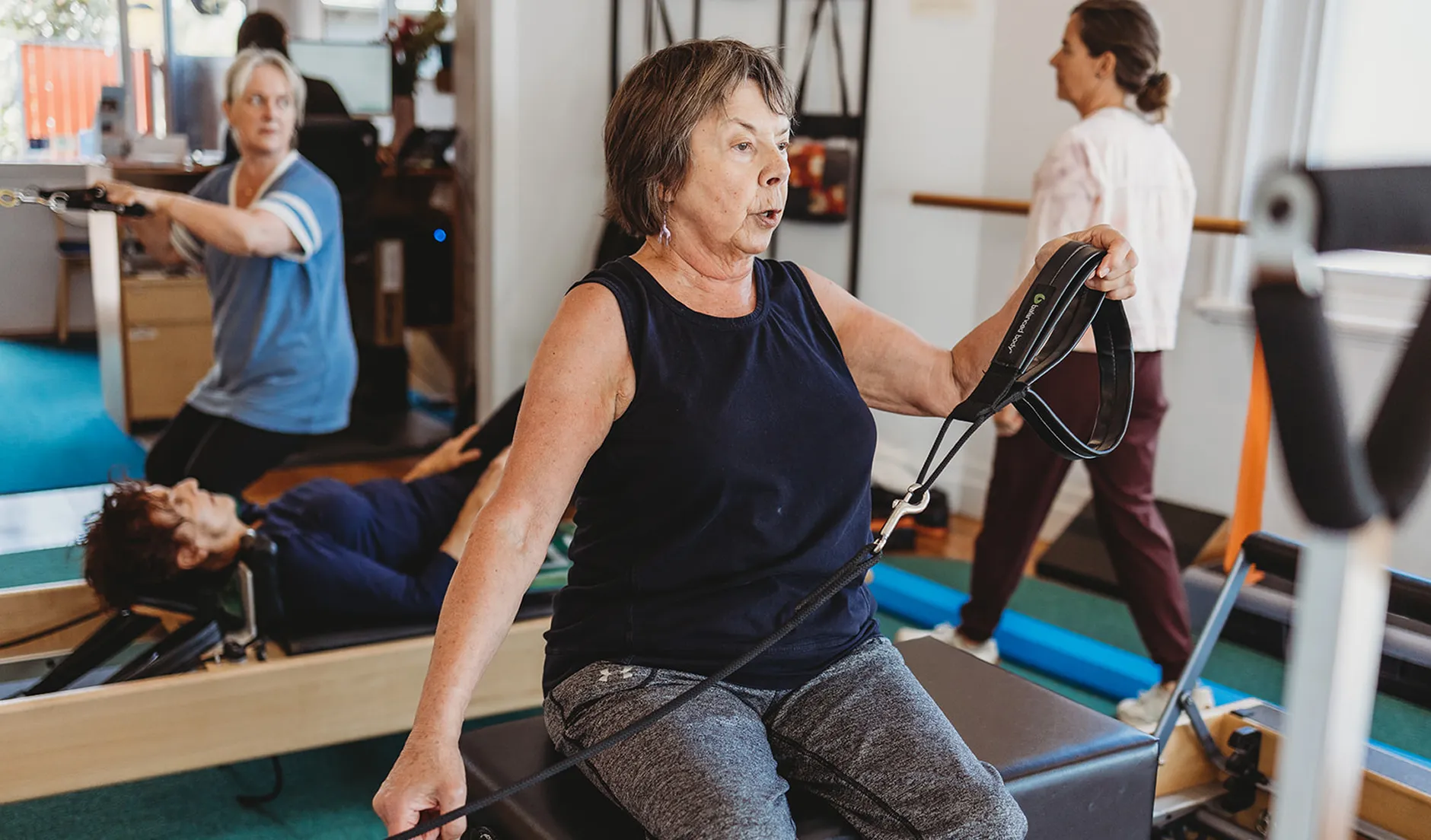
Does strength training really work after 50?
Yes. Studies on resistance training in older adults consistently show measurable improvements in muscle strength and function within 8 to 12 weeks of regular training, at two to three sessions per week.
A 2023 study published in the International Journal of Sport Nutrition and Exercise Metabolism tracked 12 weeks of progressive resistance training in two groups of older adults. In the 65 to 75 age group, one-repetition-maximum leg strength rose by an average of 38 per cent. In the group aged 85 and over, the same measure rose by 46 per cent. Both age groups also improved on functional tests including walking speed and the ability to rise from a chair. The takeaway is not the exact numbers, which vary by study and individual, but the direction: strength responds to training at every age tested.
The principles that make this work are not complicated, but they do need to be respected:
- Load matters. Resistance has to be heavy enough to challenge the muscle. Walking and gentle movement help overall health but do not on their own rebuild lost strength. A physiotherapist works out a starting load that is appropriate for your body and progresses it as you adapt.
- Consistency matters. Two to three sessions per week is the range the research supports. One session a week maintains some benefit. Nothing at all reverses nothing.
- Progression matters. The body adapts to whatever it is asked to do. If the load never changes, gains stall. A good program rebuilds the challenge every few weeks, in small and measured increments.
These are the principles behind an active ageing physiotherapy program. Not complicated in theory, but applied with the adjustments that matter for a 72 year old with arthritic knees or a 58 year old who has not done structured exercise in thirty years.
How does physiotherapy help prevent balance loss and falls?
Falls are the leading cause of injury-related hospitalisations in older Australians. According to data published by the Australian Institute of Health and Welfare, around one in three adults over 65 experiences a fall each year, and falls are the largest single contributor to hospitalised injury in that age group.
Balance is a trainable skill. It relies on three systems: the inner ear, vision, and signals from nerves in your feet, ankles, and joints telling your brain where your body is in space. All three decline with age, and the decline is often gradual enough that you do not notice until you trip.
A physiotherapy balance program targets all three. That usually includes standing exercises on progressively less stable surfaces, exercises that challenge the ankle and hip strategies your body uses to correct small losses of balance, and exercises that train the brain to process competing inputs. The 2019 Cochrane Review on exercise for preventing falls in community-dwelling older people, which drew on 108 trials with over 23,000 participants, concluded that structured exercise programs reduce the rate of falls by around 23 per cent, with balance and functional exercises being particularly effective. This is the clinical evidence base that sits behind most falls-prevention programs in Australian physiotherapy.
The practical upshot: a growing sense that your balance is not what it was is exactly the kind of concern physiotherapy is designed to address. It is easier to rebuild the system while it still works than after a fall has happened.
What active ageing physiotherapy involves at Inform Physio
At Inform Physio, active ageing physiotherapy starts with a one-to-one assessment at our Fairfield or Carlton clinic. The physiotherapist takes a full history, runs through a physical assessment that looks at strength, balance, range of motion, and functional movement, and talks with you about what you want to keep doing. Goals vary widely: keeping up with grandchildren, getting back to bushwalking or bowls, or simply staying confident on your own two feet at home.
From there, the physiotherapist writes a program that matches your body and your goals. This may include a tailored home exercise program you carry out between appointments, ongoing one-to-one sessions to supervise progression, or joining our Active Ageing Circuit small-group exercise class.
For the practical detail on our Active Ageing Circuit classes, including how they run, who they suit, and what happens in a typical session, see our companion article on fall prevention physiotherapy and the Active Ageing Circuit at Fairfield.
Common myths about ageing and strength
A few ideas about ageing and exercise are outdated or were never right in the first place. Four of the most common:
| Myth | Reality |
| It is too late to build muscle after 60. | Studies in adults aged 65 to 85 and over show meaningful strength gains within 12 weeks of progressive resistance training. Muscle responds to load at every age tested. |
| Walking is enough. | Walking supports cardiovascular and mental health but does not on its own rebuild lost strength. Resistance training is needed to address sarcopenia. |
| Strength training is dangerous for older adults. | Supervised, progressively loaded strength training has been shown to be safe in older populations in clinical trials, including in people with chronic conditions and those who are frail. |
| Gentle exercise is always safer than harder exercise. | A load too light to challenge the muscle does not rebuild strength. Careful progression under supervision is safer than doing nothing or doing too little. |
The pattern across all four is the same: a reasonable-sounding caution that, in the evidence, does not hold up.
Simple things you can do at home today
None of these replace an assessment, but any of them is a reasonable starting point while you think about booking one:
- Sit-to-stand practice. From a sturdy dining chair, stand up and sit down ten times without using your hands. Do two or three sets once a day. This is one of the best tests of lower-body strength and one of the most useful exercises to train it.
- Single-leg balance. Stand near a bench or kitchen counter. Lift one foot slightly off the ground and hold for as long as you can, up to 30 seconds. Swap sides. Do each side twice.
- Calf raises. Stand with a hand resting lightly on a bench. Rise up onto the balls of your feet, hold for a second, lower slowly. Fifteen reps, twice through.
- Wall push-ups. Stand arm's length from a wall, hands on the wall at shoulder height. Bend the elbows to bring your chest toward the wall, push back. Ten to twelve reps, twice through.
If any of these cause pain, breathlessness beyond light exertion, or dizziness, stop and speak with a health professional before continuing. Home exercises are a useful starting point, but they are not a substitute for assessment when something does not feel right.

Frequently asked questions
No. You can book directly with a physiotherapist in Australia without a GP referral. A referral becomes relevant if you are accessing treatment under a Chronic Disease Management plan (previously called an Enhanced Primary Care plan) through Medicare, which covers a limited number of subsidised sessions per calendar year.
Medicare may subsidise a set number of sessions per year under a Chronic Disease Management plan arranged by your GP. Most private health funds with extras cover physiotherapy, with rebate amounts varying between funds and policy levels. Check with your fund for your specific rebate and annual limit.
Typically one to two sessions per week during the early stages of a program, tapering to fortnightly or monthly check-ins once you are established and progressing your own home or group program. Your physiotherapist will match the frequency to your goals and progress.
For most people, yes. Progressive, supervised exercise is well supported by clinical evidence as beneficial for adults with osteoarthritis, osteoporosis, type 2 diabetes, and many stable cardiovascular conditions. Your physiotherapist will ask about your full medical history at the initial assessment and adjust the program to your conditions. Where a medical clearance is appropriate, your physiotherapist will let you know before starting.
Many people notice better day-to-day function, particularly in things like climbing stairs and rising from chairs, within 4 to 6 weeks of consistent training. Measurable strength gains tend to show on formal testing by 8 to 12 weeks. Balance improvements often appear earlier than strength gains because balance is a skill the nervous system adapts to quickly.
When is a good time to start?
The honest answer is earlier than you think. Many people in their 50s, 60s, and 70s delay not because they doubt the value, but because it feels less urgent than a hundred other things on the list, and there is always next month. What the research is clear about is that what matters most for active ageing is starting, not timing. The strongest predictor of independence in older age is whether someone has kept moving in ways that maintain strength and balance.
If you want to talk to someone about what that could look like for you, book an initial assessment at Inform Physio Fairfield or Carlton. Thirty minutes with a physiotherapist will give you a clear picture of where you are, what would help, and what a realistic program looks like from here.
The information on this page is general in nature and is not a substitute for individual clinical assessment. If you have specific concerns about your health or ability to exercise safely, book an assessment with a qualified physiotherapist or speak with your GP.