
No products in the cart.
If you have had a baby and want to get back to exercise, the hard part is often knowing what is enough and what is too much. Clinical pilates for pelvic floor recovery after birth can be useful when it is matched to your symptoms, birth history, healing, and assessment findings.
It is not about rushing into harder core exercises. A physiotherapist can check pelvic floor function, abdominal wall recovery, pain, breathing, and movement control before the program becomes more loaded.
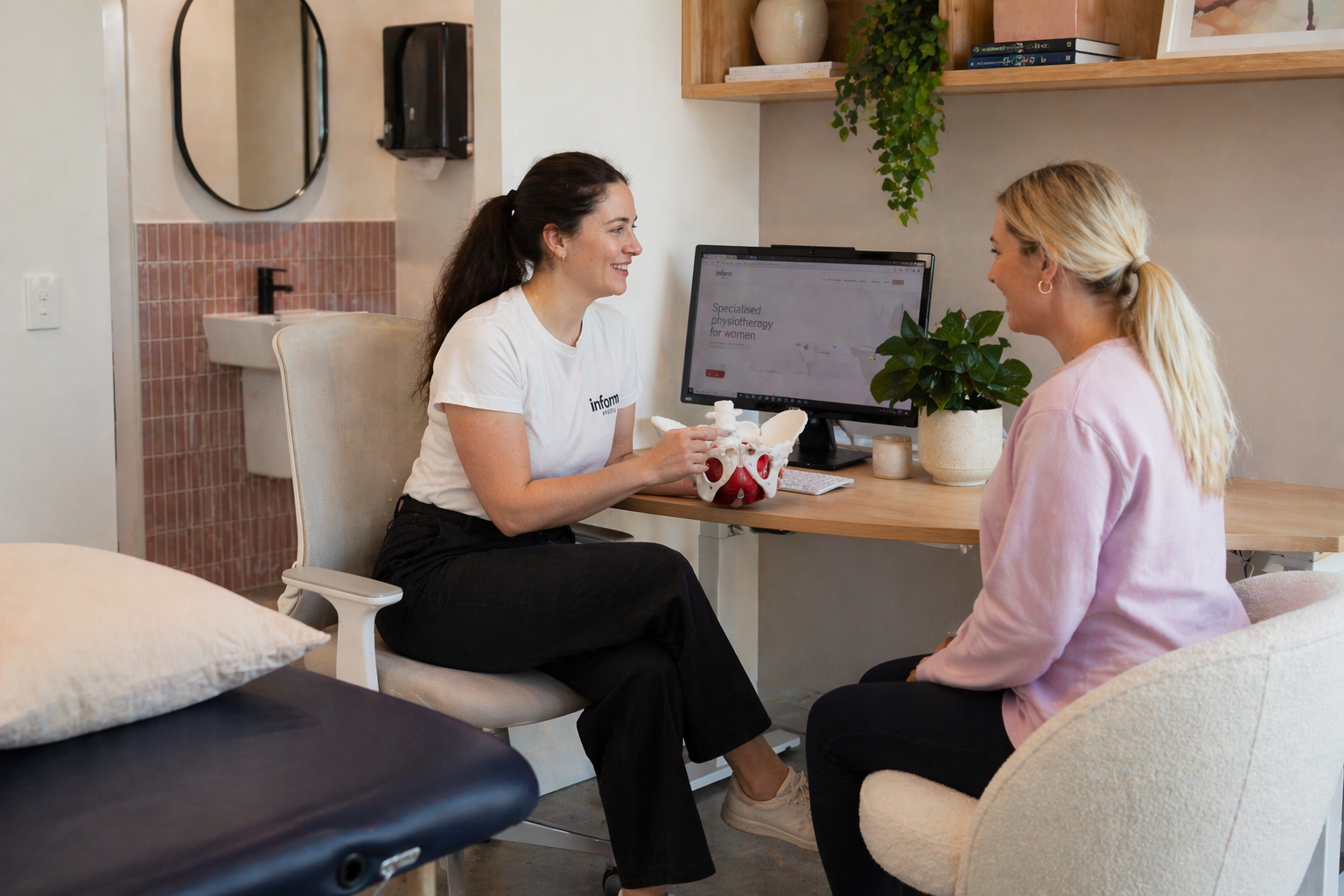
At Inform Physio in Fairfield and Carlton, clinical pilates and pelvic health physiotherapy can sit together. For some people, the right first step is a pelvic health assessment. For others, it may be a low-load clinical pilates program with clear limits. The aim is to move forward without guessing.
When is pilates useful after birth?
Postnatal pilates is most useful when it helps you reconnect with movement after pregnancy, birth, and weeks of feeding, carrying, lifting, and interrupted sleep.
A well-matched program may help with:
- rebuilding confidence with movement
- returning to core and strength work gradually
- learning how breathing, the abdominal wall, and the pelvic floor work together
- building strength for lifting, feeding, pram pushing, and daily tasks
- supporting a gradual return to exercise after vaginal birth or caesarean birth
Timing still matters. Pregnancy Birth and Baby says gentle pelvic floor and abdominal exercises can often start in the first few days after birth if they do not increase pain. It also advises waiting until the postnatal check-up before returning to gym programs, group exercise, or personal training.
The Royal Women's Hospital gives similar advice. It says pelvic floor and deep abdominal exercises can be started when you feel ready after birth, provided there is no increase in pain.
This means post pregnancy pilates should not be treated as a race. The question is not only, 'How many weeks has it been?' It is also, 'What happens when I cough, lift, walk, squat, breathe, and load?'
What should be checked before postnatal pilates gets harder?
Postnatal pilates should usually become more loaded only after the body has been checked against the demands of the exercises. 'Core' is not one muscle. It includes the diaphragm, abdominal wall, deep back muscles, and pelvic floor working together.
| Check | Why it matters |
|---|---|
| Pelvic floor symptoms | Leaking, urgency, heaviness, or pain may change the exercise plan. |
| Abdominal separation | Load may need to be changed while the abdominal wall recovers. |
| Caesarean or perineal healing | Healing tissue may need staged loading and careful pressure control. |
| Back, hip, or pelvic pain | Pain can change exercise choice, position, and pace. |
| Breathing and bracing | Holding the breath can increase pressure through the pelvic floor. |
Pregnancy Birth and Baby advises avoiding sit-ups, crunches, and abdominal curls after a caesarean because they can put pressure on the scar. It also says to see a doctor or women's health physiotherapist if abdominal separation is not improving. A physiotherapist-guided program can use this information to choose the right version of an exercise. A bridge, squat, reformer exercise, or plank variation may be useful for one person and too much for another at the same stage after birth.
What is different about clinical pilates at a physiotherapy clinic?
Physio-guided clinical pilates is an exercise pathway that starts with health history, assessment, and clinical reasoning. It can still use Pilates equipment and principles, but the exercise choices are shaped by symptoms, goals, and safety limits.
| General pilates class | Physio-guided clinical pilates |
|---|---|
| Usually starts from a class level or group format. | Starts with assessment and a plan matched to the person. |
| Progression is often based on the class type. | Progression is based on symptoms, control, recovery, and goals. |
| The instructor may have limited health history. | The physiotherapist considers birth recovery, pain, pelvic floor symptoms, and medical context. |
| Exercises may be suitable for general strength and fitness. | Exercises can be changed when leaking, heaviness, pain, or abdominal doming appears. |
This is not a claim that every person after birth needs a physiotherapy clinic. Many people return to general exercise without major problems. The difference matters when symptoms, healing, or confidence make a standard class feel uncertain.
Inform Physio's Clinical Exercise and Pilates page says new clients attend an initial assessment with a physiotherapist before joining Clinical Exercise and Pilates. It also notes that clinical exercise sessions are taught by physiotherapists with extra Pilates certification, while Pilates classes are taught by diploma trained Pilates instructors.
Which symptoms mean you should get assessed first?
A pelvic health assessment is worth considering before making postnatal pilates harder if symptoms appear during daily life or after exercise.
- leaking urine or faeces
- urgency, frequency, or difficulty controlling the bladder or bowel
- a heavy, dragging, or bulging feeling in the vagina or pelvis
- pain with exercise, sex, or daily movement
- abdominal doming, coning, or a gap that concerns you
- difficulty returning to walking, lifting, stairs, or pram pushing
- symptoms that are worse later in the day or after exercise
Pregnancy Birth and Baby lists bladder problems, bowel problems, and prolapse symptoms such as pressure or a bulge as signs of pelvic floor weakness. It also says pelvic floor health is usually assessed by a trained health professional, such as a pelvic floor physiotherapist, and that consent should be discussed before any internal examination.
The practical point is simple. If a movement makes leaking, heaviness, pain, or abdominal doming worse, it is a sign to step back and review the plan. It does not mean you have failed at exercise.
What might a gradual return look like?
A gradual return is a staged pathway, not a fixed timetable. The examples below are general only. Your medical advice, birth recovery, symptoms, sleep, pain, and confidence all matter.
| Stage | Focus | Examples |
|---|---|---|
| Early recovery | Gentle pelvic floor work, breathing, walking, and basic activation. | Short walks, gentle floor work if comfortable, relaxed breathing practice. |
| Building control | Reconnecting core, hips, spine, and pelvic floor. | Low-load pilates exercises, posture practice, lifting mechanics. |
| Building strength | More resistance, endurance, and whole-body strength. | Reformer or mat progressions if symptoms allow. |
| Return to higher impact | Only when assessment and symptoms support it. | Running, jumping, sport, or heavier gym work with staged progression. |
How does this fit with Inform Physio's pelvic health service?
Inform Physio's pelvic health physiotherapy service covers bladder and bowel incontinence, urgency, prolapse symptoms, pelvic pain, perineal tear or episiotomy recovery, and postnatal pelvic floor strengthening.
Its Women's Health page also describes clinical pilates as one way to help bridge the gap between pelvic floor exercises and day-to-day pelvic floor function. That gap is often where people get stuck. Pelvic floor exercises on the floor may feel manageable, but lifting a pram, carrying a baby capsule, or returning to a class can expose symptoms.
Clinical pilates for pelvic floor recovery after birth can be part of that bridge. It gives the person a supervised way to test movement, pressure, strength, and control before moving into harder training.
Frequently asked questions
It depends on your birth, symptoms, and medical advice. Gentle pelvic floor and abdominal exercises may start in the first few days if comfortable, but group exercise and more formal pilates usually need to wait until after your postnatal check-up. If you have pain, bleeding concerns, infection, wound issues, or symptoms that worsen, get medical advice first.
Possibly, but the exercise needs to match how your abdominal wall manages pressure. If you notice doming, coning, discomfort, or a gap that worries you, a physiotherapist can assess how your abdominal wall behaves during movement and change the program.
Pilates may support pelvic floor recovery when it is paired with the right pelvic floor advice. Leaking is a sign that the plan may need assessment. A pelvic health physiotherapist can check whether the issue is weakness, coordination, pressure management, urgency, or another factor.
Reformer pilates can be appropriate for some postnatal people, but the springs, position, range, and pace all matter. A gentle reformer exercise can still be too much if it increases pressure, pain, leaking, or heaviness. The safer question is not whether reformer is safe for everyone. It is whether the chosen exercise is right for your body now.
Not everyone needs one. It is more important if you have leaking, urgency, heaviness, prolapse symptoms, pain, abdominal doming, birth injury, caesarean concerns, or anxiety about returning to exercise. An assessment can help decide whether to start with pelvic health physiotherapy, clinical pilates, or a combination.
Start with an assessment, not a guess
If you are booking after birth, tell the clinic your birth type, approximate weeks or months postpartum, and any symptoms such as leaking, heaviness, pain, abdominal separation, caesarean scar sensitivity, or prolapse concerns. These details help the team decide whether the first appointment should be pelvic health physiotherapy, clinical pilates, or both.
Wear clothes you can move in, such as leggings or shorts and a comfortable top. Bring any relevant birth notes, specialist letters, imaging reports, or postnatal check-up advice if you have them. If you are breastfeeding or expressing, it can also help to plan the appointment around comfort, feeding, and timing.
Inform Physio can then help you choose the next step at Fairfield or Carlton. That may be a pelvic health assessment first, a clinical pilates program with clear modifications, or a staged plan that starts with symptoms and builds toward the exercise you want to return to.