
No products in the cart.
It's 8pm. Your lower back has been aching since lunchtime and it grips every time you shift on the couch. You're 28 weeks. You've been searching for pregnancy massage in Fairfield and the results are all day spas. You want help. You also want to know it's safe at this stage, that the therapist will understand what's behind the pain, and that you'll feel better afterwards rather than just relaxed for an hour.
That decision is what this guide is for. At Inform Physio in Fairfield (and at our Carlton clinic), pregnancy massage runs differently from a day spa. It starts with an assessment, it's delivered by a qualified physiotherapist or remedial massage therapist with prenatal training, and it targets the specific thing causing your pain. The rest of this article covers what that means in practice, what's safe at each stage of pregnancy, and when massage isn't the right answer.
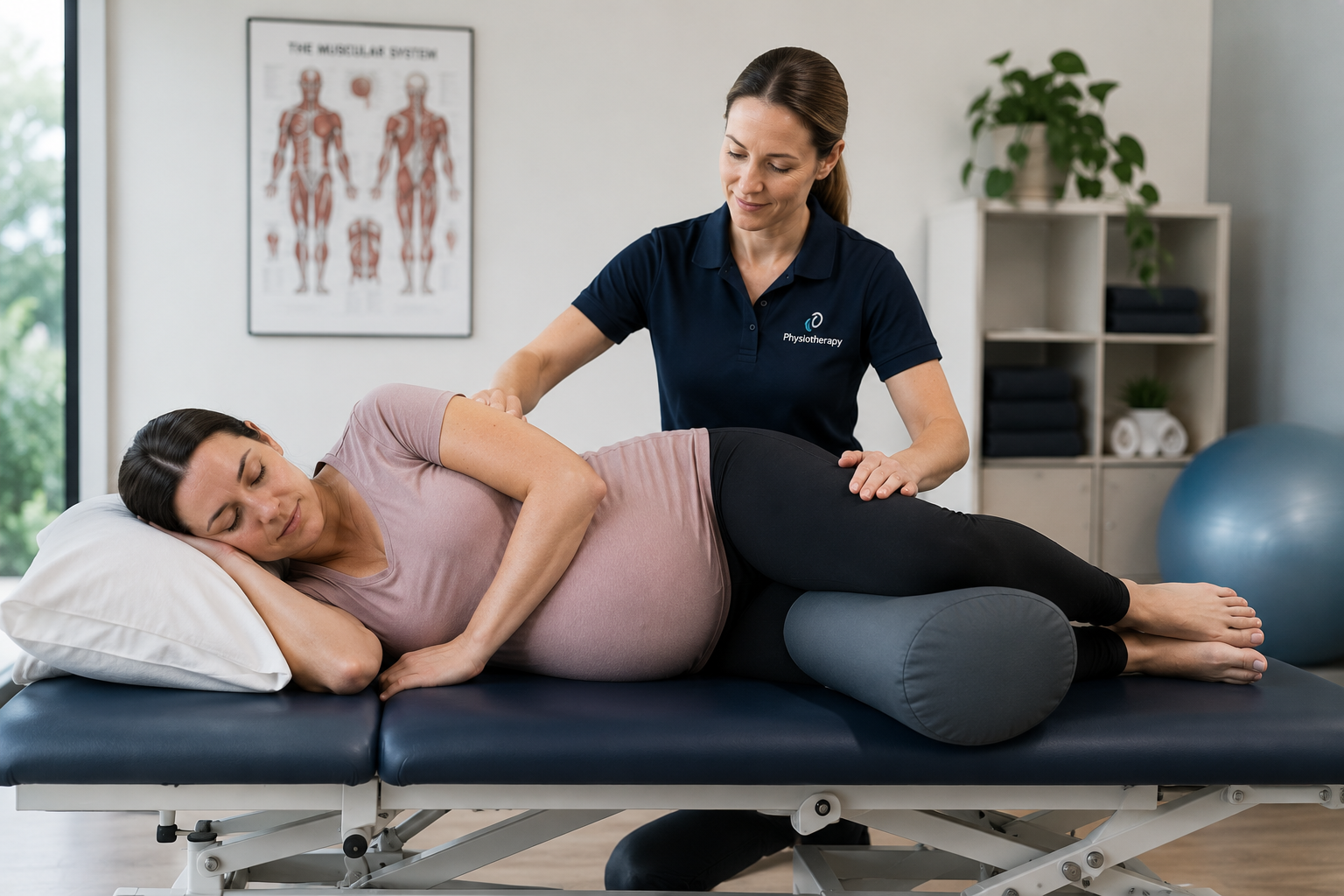
What's different about pregnancy massage at a physiotherapy clinic?
A day spa pregnancy massage and a physiotherapy clinic pregnancy massage are not the same service. Both have a place. The right choice depends on what you are looking for.
| Aspect | Day spa pregnancy massage | Physiotherapy clinic pregnancy massage |
|---|---|---|
| Primary purpose | Relaxation and general comfort | Treatment of a specific pain or condition |
| Session starts with | Booking and check-in | An assessment and a clinical history |
| Practitioner | Spa or beauty therapist | Physiotherapist or remedial massage therapist with prenatal training |
| Approach | Full-body relaxation routine | Targeted soft tissue and joint work for the affected area |
| What you leave with | A more relaxed body | A treatment plan, often with exercises and positioning advice |
| Best suited to | A comfortable pregnancy with no specific complaint | Pelvic girdle pain, back pain, sciatica, hip pain, or neck tension |
At our clinic, a session looks like this. The therapist asks about your pregnancy, current pain, prior pregnancies, medical history, where the discomfort is, and what makes it worse. Treatment is targeted at the structures driving your pain, not a generic full-body routine. Pressure, technique and positioning are adapted to your pregnancy and to the specific condition. The session may include hands-on soft tissue work, gentle joint mobilisation, advice on positioning, and exercises to do between appointments.
If you have a comfortable pregnancy and you want a quiet hour, a day spa is a reasonable choice. If something hurts, a physiotherapy clinic is the better fit.
When is pregnancy massage safe?
The honest answer: in most pregnancies, across all three trimesters, with positioning and technique adapted as the pregnancy progresses. The more important question is when massage is not appropriate, which the next section covers.
| Trimester | Positioning | Typical approach | Notes |
|---|---|---|---|
| First (up to 13 weeks) | Side-lying with bolsters; supine with a wedge if comfortable | Gentle technique, more conservative pressure | Practice varies between clinics. Some treat with appropriate caution; some prefer to wait until 13+ weeks. The decision is shared with you. |
| Second (14 to 27 weeks) | Side-lying with bolsters as the bump grows | Generally the most comfortable trimester for treatment | Positioning becomes a bigger factor from around 20 weeks. |
| Third (28 weeks onwards) | Side-lying with full bolster support | Standard work, with extra attention to comfort | Prone (face down) is not used. Many therapists apply lighter pressure around the lower legs and ankles as a precaution. |
A note on the older guidance to avoid certain pressure points because they are said to induce labour. The evidence for specific points triggering labour is weak. Many therapists still apply gentle pressure around the lower legs and ankles as a precaution, but the strict rules you read online are not strongly supported by current research.
Miscarriage risk is highest in the first trimester regardless of activity, and is not increased by appropriately delivered massage. The principle is caution, not restriction.
What can pregnancy massage help with?
Below are the most common reasons women book pregnancy massage at a physiotherapy clinic. The framing for each is ‘may help with’ or ‘forms part of treatment for’ rather than ‘treats’ or ‘cures.’ Massage usually sits inside a broader plan with exercise, positioning advice, and self-management.
- Pelvic girdle pain (PGP): Pain around the pubic bone, hips, sacroiliac joints, or buttocks. A 2021 Sydney study of 780 pregnant women, published in Spine, put the point prevalence at 44%, rising with each week of gestation. Massage forms part of a plan that may also include exercises and a non-rigid support belt.
- Lower back pain: An Australian study of women in the third trimester reported pregnancy-related lumbopelvic pain in 71% of participants. Soft tissue work to the lower back, glutes, and hip flexors can reduce muscle tension contributing to pain.
- Hip pain: Often related to changes in pelvic loading and increased stress on the hip rotators as the pregnancy progresses.
- Sciatica-type pain: Pain travelling down the leg, often related to nerve irritation through the pelvis or buttock. Massage forms part of treatment rather than a stand-alone cure.
- Upper back and neck tension: Common in later pregnancy as breast tissue increases and posture shifts.
- Leg and calf tightness, mild swelling: Gentle work with appropriate technique can help, alongside elevation, hydration, and gentle movement.
If you are not sure which fits, that is the point of the assessment. What feels like back pain is sometimes pelvic girdle pain, and the treatment differs.
When isn't pregnancy massage appropriate?
There are situations where the right answer is not treatment, but a check-in with your maternity team. A responsible clinic recognises these and reschedules or refers. If any of the below apply, the therapist will ask whether your GP, midwife or obstetrician is aware, and may pause treatment until that is resolved.
- Pre-eclampsia, gestational hypertension, or unmanaged high blood pressure
- A pregnancy classified as high-risk by your obstetrician (placenta previa, severe IUGR, previous preterm labour, and similar)
- Vaginal bleeding or amniotic fluid leaking
- Severe swelling, particularly if only on one side (this can be a sign of DVT)
- Fever or signs of infection
- Severe morning sickness or hyperemesis, where positioning may not be tolerated
This is not a complete list. Anything flagged as a concern by your maternity team is worth mentioning when you book. Telling the therapist will not automatically cancel the session. It lets her adapt safely or, where the answer is not today, make that call with you rather than around you.
Who delivers pregnancy massage at our Fairfield and Carlton clinics?
Sessions run from our Fairfield clinic and, for prenatal massage in Melbourne's inner north, from our Carlton clinic. The therapists who deliver pregnancy massage are qualified physiotherapists or remedial massage therapists with prenatal training, with credentials through the Australian Physiotherapy Association or the Australian Association of Massage Therapists.
Your initial appointment is structured around assessment first, treatment second. Treatment is delivered in the same session unless something in the assessment is a reason to pause and refer.
What happens at your first appointment?
An initial pregnancy massage appointment runs for 45 to 60 minutes. The breakdown:
- Intake forms: A short form covers your pregnancy stage, current pain, medical history, and your maternity team's contact details if you would like the therapist to liaise.
- What to wear: Loose, comfortable clothing. You change once the therapist has left the room. Draping is appropriate throughout the session.
- Positioning: Side-lying with bolsters from the second trimester onwards. In the first trimester, supine with a wedge is sometimes used if it is comfortable.
- You are in charge: You can ask the therapist to stop, change pressure, or change position at any point.
- A support person is welcome: Partner, friend, or family member, whichever helps you feel comfortable.
Rebates: physiotherapy-delivered pregnancy remedial massage may attract a Medicare rebate via a GP chronic disease management plan, and many private health funds cover physiotherapy or remedial massage under extras. Amounts depend on your plan and your fund, so check with both before booking rather than rely on a quoted figure.
You leave with a treatment plan. For a specific complaint like pelvic girdle pain or sciatica, the plan usually involves a course of sessions over several weeks, alongside exercises and positioning changes. For general tightness in a low-complexity pregnancy, a single session can be enough.
Frequently asked questions
A day spa pregnancy massage is built around relaxation. A physiotherapy clinic pregnancy massage is built around a specific complaint. The session starts with an assessment, the therapist has prenatal training, and you leave with a treatment plan rather than only a slot to rebook. If your pregnancy is comfortable and you want quiet time, either is fine. If you have pain, a physiotherapy clinic is the better choice. Our earlier article on clinical assessment-led remedial massage covers the general principle in more detail.
No. Pregnant women can book a remedial massage or physiotherapy appointment directly. A GP referral with a chronic disease management plan may attract a Medicare rebate; check with the clinic and your GP about whether it applies in your situation.
In most cases, yes, with appropriate positioning and technique. The decision is shared between you and the therapist, with your maternity team aware where relevant. If you have any concerns, or your pregnancy has been flagged as higher risk, raise it on the intake form and the therapist will work through it with you before treatment begins.
It depends on the condition. Pelvic girdle pain and persistent lower back pain may take several sessions over a few weeks alongside exercises. General tightness in a low-complexity pregnancy can sometimes be helped in a single session. The plan you leave with after the first appointment will give you a clearer sense.
Yes. Some women find a partner or friend in the room reassuring, especially at a first appointment. Let the clinic know when you book so we can plan the room accordingly.
About the author
This article was written byAPA-member physiotherapist with prenatal training; or AAMT-registered remedial massage therapist with prenatal training] at Inform Physio. [Two- to three-sentence bio covering scope of practice, years working with pregnancy and postnatal clients, and any further training in pregnancy massage or pelvic health.the clinician's team-page profile on the Inform Physio website.
Book your initial appointment
If you are not sure where to start, the most useful step is the initial appointment. It runs 45 to 60 minutes, starts with the assessment described above, and ends with a written treatment plan you can take to your midwife, GP, or obstetrician if you would like them across the treatment.
There is also an assessment-only option for women in the first trimester who want to plan ahead. You meet the therapist, talk through what you have been experiencing, and leave with a plan for when, or whether, to start treatment, without committing to a hands-on session that day.
To book a pregnancy massage initial appointment in Fairfield or Carlton, call the clinic or use the online booking page. Wear loose clothing, bring a list of any medications you are taking, and on the booking form, note any specific pain you would like the therapist to focus on.