
No products in the cart.
Growing older often comes with the assumption that losing strength and balance is inevitable. In reality, the body is far more adaptable than most people think.
With the right approach, you can build muscle, improve balance and maintain mobility well into later life.
At Inform Physio in Fairfield, physiotherapists see this every week — people in their 50s, 60s and 70s moving better than they did a decade earlier because they’ve learned how to train smarter, not harder.

What Happens to Muscles as We Age
After about the age of 40, muscle tissue begins to decline gradually, a process known as sarcopenia. The rate of loss depends on how active we are.
Sedentary adults may lose up to 8 per cent of their muscle mass per decade, while those who keep moving maintain much more.
The change isn’t only in size but also in how the nervous system activates the muscles. With less regular use, coordination slows and balance reactions fade.
The good news is that all these systems can be retrained through targeted, evidence-based exercise.
Strength Is Still Trainable
Research from Australian and international universities shows that older adults can increase strength and muscle size through resistance training in as little as eight to twelve weeks.
The key is progression and consistency, not intensity.
Physiotherapists design programs that:
- Begin at your current level and progress safely
- Include both resistance and balance exercises
- Emphasise controlled, functional movement rather than heavy lifting
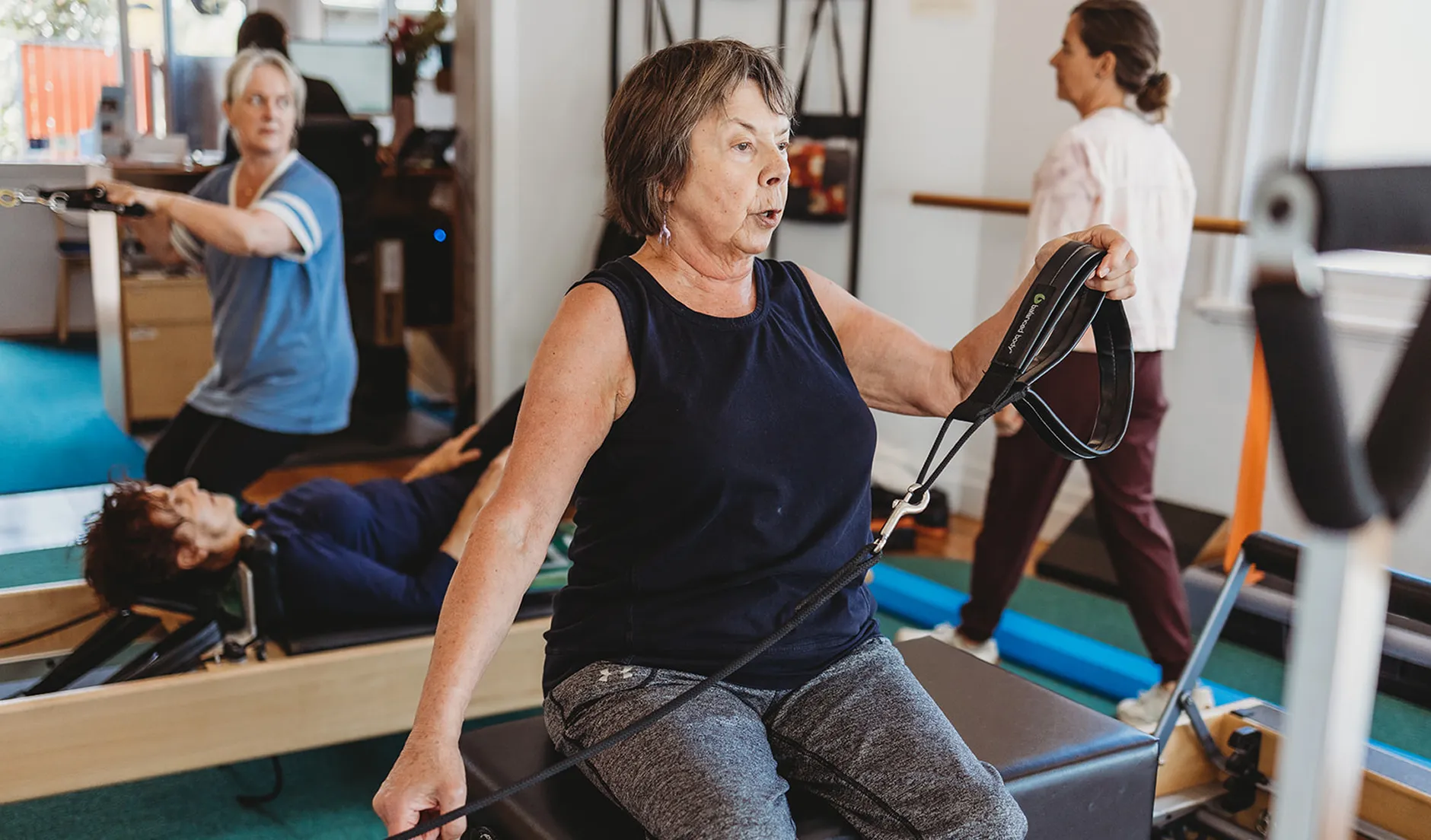
Even light weights, body-weight exercises or resistance bands can stimulate new muscle growth when used regularly.

Balance Can Be Relearned
Falls are a major cause of injury for Australians over 65, yet many are preventable.
Balance training works by retraining the brain and body to respond quickly to changes in position.
Effective exercises include:
- Standing on one leg while holding a stable surface
- Walking heel-to-toe along a line
- Stepping in different directions while keeping the upper body steady
- Practising sit-to-stand movements from a chair
Physiotherapists often combine these drills with strength work for the ankles, hips and core, creating a complete balance and stability program.
The Role of Active Ageing Physiotherapy
Active ageing physiotherapy focuses on keeping people moving, confident and independent.
It is not about treatment after a fall but prevention through proactive care.
During an appointment, your physiotherapist will:
- Assess posture, strength, flexibility and balance
- Identify any habits or fears that limit movement
- Develop an individual exercise plan to address weak areas
- Teach safe movement techniques for home or group classes
The goal is to maintain independence, whether that means walking the dog, climbing stairs or playing with grandchildren.
Mobility Is More Than Stretching
Maintaining mobility isn’t just about flexibility; it’s about joint control and strength through range.
When muscles weaken, joints can stiffen or move unevenly, leading to pain and fatigue.
Targeted mobility exercises help:
- Keep hips, knees and ankles flexible
- Maintain upright posture
- Support efficient walking and turning
- Prevent joint stiffness that discourages activity
Combining mobility work with strength training ensures you stay agile and comfortable.
Why Movement Protects More Than Muscles
Regular movement supports heart and brain health, bone density and mood regulation.
Weight-bearing exercise improves bone strength, while rhythmic activities such as walking, Pilates or swimming help maintain cardiovascular fitness.
Studies also show that adults who exercise regularly sleep better, think more clearly and have a lower risk of depression.
Common Myths About Ageing and Strength
| Myth | Reality |
| “It’s too late to start exercising.” | Muscles and bones adapt at any age when activity is introduced gradually. |
| “I’ll hurt myself if I lift weights.” | Strength training guided by a physiotherapist is one of the safest forms of exercise. |
| “Walking is enough.” | Walking is great for endurance but doesn’t build the strength needed to prevent falls. |
| “Joint pain means I should rest.” | Gentle, targeted movement usually reduces pain and stiffness over time. |
How Physiotherapists Keep It Safe
At Inform Physio, programs are designed around individual ability and medical history. Sessions might include supervised exercises, home routines or group classes for ongoing motivation.
Each plan typically involves:
- Strength and resistance work two to three times a week
- Balance and coordination drills
- Mobility and flexibility exercises
- Lifestyle strategies to keep activity part of everyday life
Progress is monitored regularly so exercises stay effective and achievable.

The Emotional Side of Staying Strong
Physical strength builds more than muscle; it creates confidence.
Many older adults find that being able to get out of a chair easily, carry groceries or walk longer distances without fear of falling transforms how they feel about ageing.
Physiotherapists see these changes not just in movement but in mindset — a reminder that staying strong is about quality of life, not appearance.
Simple Ways to Start Today
Stand up from your chair without using your hands a few times each day
Take short walks and gradually increase duration
Practise balancing on one leg while brushing your teeth
Join a local strength or balance class
Book an active ageing assessment to learn what’s safe for you
Small, regular steps create lasting change.
Inform Physio’s Approach
Inform Physio’s team in Fairfield specialises in active ageing and fall-prevention programs tailored to older adults.
Sessions are practical, encouraging and focused on helping you stay strong, steady and independent.
You can learn more or book an appointment through the Active Ageing Physiotherapy page.
Further Reading
Australian Physiotherapy Association
World Health Organization Physical Activity Guidelines for Older Adults
For more information, Talk to us at Inform Physio
Disclaimer
This information is general and does not replace individual medical advice. Always consult a qualified physiotherapist or healthcare provider before starting new exercise routines.