
No products in the cart.
Pregnancy transforms almost every muscle group, but few matter more than the pelvic floor. These deep muscles act like a hammock, holding the bladder, uterus and bowel. As your baby grows, hormones soften the tissues and extra weight increases pressure. That combination can change how the muscles work, even before labour begins.
A pelvic floor check gives you a clear picture of what’s happening now, not after something goes wrong.

Why Physiotherapists Recommend a Check Before Birth
Seeing a pelvic health physiotherapist while you’re still pregnant helps you:
- Understand your baseline: how strong or tight your pelvic floor is right now
- Learn the correct technique: many women unknowingly hold their breath or use the wrong muscles
- Prepare for birth: knowing how to relax as well as contract reduces tearing risk
- Recover faster: you’ll already know how to reconnect with these muscles afterwards
- Avoid guesswork: every woman’s body responds differently to pregnancy hormones
These are small insights that often make a big difference later.
What Happens During a Pelvic Floor Check
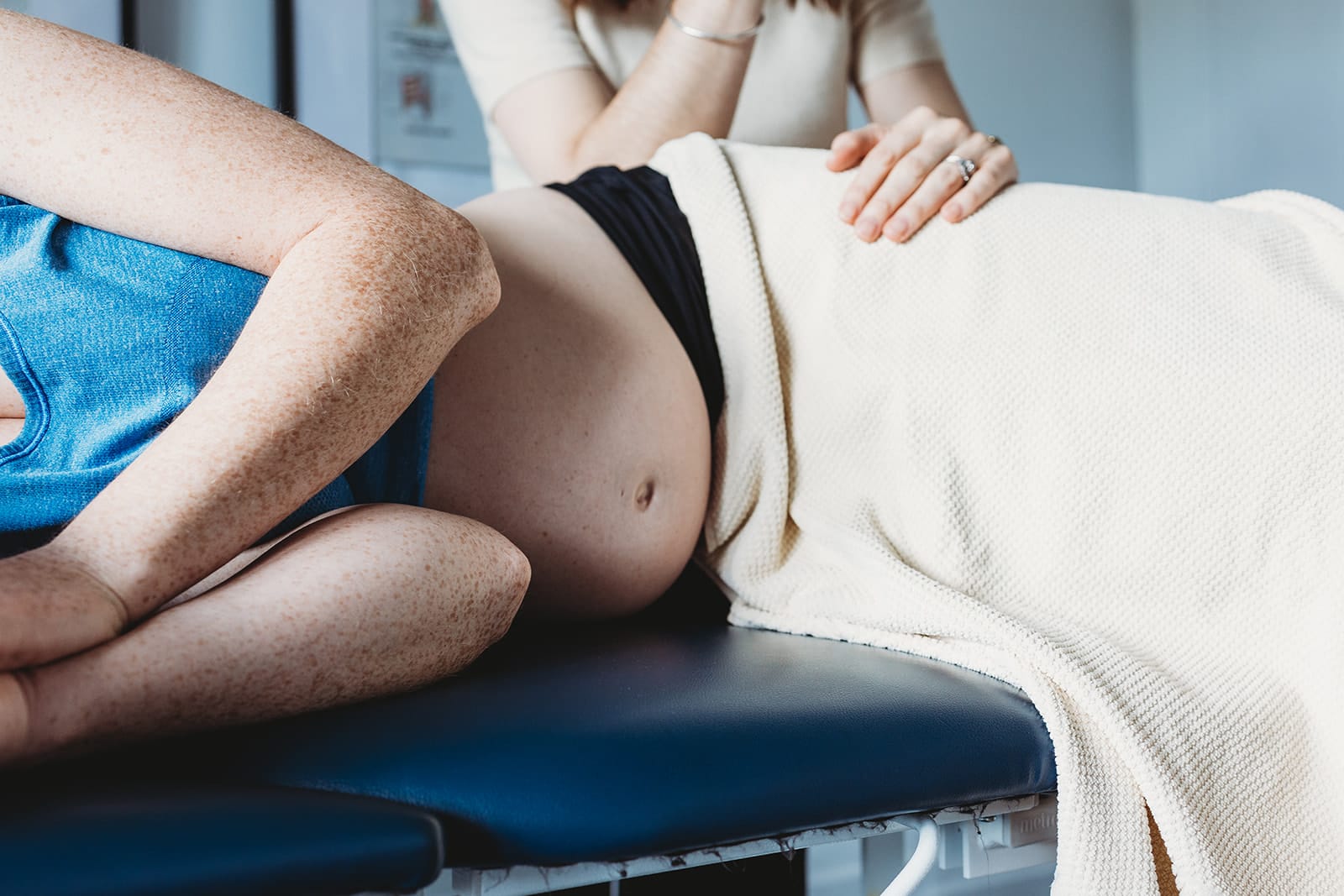
A check-up is nothing like a medical exam. It’s a private, guided session with a physiotherapist trained in women’s health. The aim is education and awareness, not judgment.
You’ll usually discuss:
- Any bladder or bowel changes
- Exercise habits and posture
- Breathing patterns, which influence pelvic pressure
The physiotherapist may then assess:
- How well you can contract and relax the pelvic floor
- Muscle endurance and coordination
- Whether the muscles are weak, tight or working in the wrong sequence
Some checks involve a gentle internal assessment, but only with consent. Others use observation and real-time ultrasound.

The Muscles Need to Contract and Let Go
Many women can tighten their pelvic floor but can’t release it fully. That’s crucial during labour because muscles that won’t relax can make delivery harder.
Your physiotherapist will teach:
- How to lift and release rather than grip and hold
- How to breathe through contractions without pushing down
- Gentle cues such as “lift your pelvic floor as you exhale” or “let go completely on the inhale”
This skill helps reduce tearing and assists recovery in the first weeks after birth.
The Benefits That Carry into Postnatal Life
| Concern | Why It Happens | How Early Physiotherapy Helps |
| Bladder leaks when sneezing or coughing | Muscle weakness or delayed contraction | Strength training with breathing coordination |
| Heaviness or dragging feeling | Ligament stretch and pressure on organs | Early awareness and safe lifting techniques |
| Pelvic pain | Overactive muscles or tension | Gentle relaxation and posture education |
| Difficulty returning to exercise | Poor activation or fear of injury | Supervised reactivation and graded loading |
The Best Time to Have a Pelvic Floor Check
You can have a pelvic floor check at any stage of pregnancy, but most women benefit between 20 and 34 weeks. That’s when postural changes are noticeable but before late-pregnancy fatigue sets in.
If you’re unsure, your physiotherapist will help choose the right timing based on your comfort, medical history and activity level.
If you’re unsure, your physiotherapist will help choose the right timing based on your comfort, medical history and activity level.
Every Woman’s Pelvic Floor is Different
There’s no single right strength. Some women are strong but overactive, meaning their muscles never switch off. Others are flexible but underactive.
That’s why general advice from social media or friends rarely fits everyone. A personalised assessment ensures your exercises match your body, not someone else’s.
That’s why general advice from social media or friends rarely fits everyone. A personalised assessment ensures your exercises match your body, not someone else’s.
What You’ll Take Away from the Appointment
By the end of your session, you’ll know:
- How to correctly engage and relax your pelvic floor
- A safe exercise plan for the rest of pregnancy
- How to protect your back and core while lifting or getting out of bed
- What to expect in the first six weeks after birth
- When to follow up for postnatal review
It’s one of the most practical forms of birth preparation you can do.
Why Prevention is Easier Than Repair
After birth, the body has healing to do. Starting pelvic floor work early reduces the risk of common issues such as:
- Incontinence
- Pelvic organ prolapse
- Painful intercourse
- Difficulty resuming exercise
Physiotherapists often describe antenatal care as future-proofing your pelvic health. Addressing small weaknesses now prevents larger challenges later.

How Inform Physio Helps
At Inform Physio in Fairfield, Melbourne, women’s health physiotherapists provide confidential pelvic floor checks and education throughout pregnancy and after birth. Sessions combine assessment, movement education and confidence-building so you can approach labour and recovery with clarity, not confusion.
Visit the Women’s Health Physiotherapy page for more details or to make a booking.
Frequently Asked Questions about Pelvic Floor Checks before birth
Yes. When performed by a qualified women’s health physiotherapist, it’s gentle and completely safe for you and your baby.
No. The check is about prevention. It helps identify potential weakness or overactivity before it causes problems.
You can if you’d like them to understand what happens and how to support you. Education helps both parents.
It’s still beneficial. Each pregnancy affects the pelvic floor differently, and a check helps guide safe reconditioning.
Many funds include physiotherapy under women’s health extras. The clinic can confirm your eligibility.
Further Reading
Australian Physiotherapy Association
Continence Foundation of Australia
Royal Australian and New Zealand College of Obstetricians and Gynaecologists Antenatal Care Guidelines
Disclaimer
This information is general and does not replace professional medical advice. Always consult a qualified physiotherapist or healthcare provider for a personal assessment.